

Small Island Developing States (SIDS) like Kiribati are especially vulnerable to climate change. Their isolation, limited land, and low elevation make them particularly at risk as sea levels rise. Kiribati’s economy, which depends on fishing and tourism, is fragile, making the country even more vulnerable. These factors—geographic isolation, economic dependence, and environmental threats—put SIDS like Kiribati on the frontlines of the climate crisis, where the stakes are existential.
Inspired by a video reporting course by Worldview International Foundation (WIF), a group of young climate activists in Kiribati went beyond expectations, leading grassroots efforts to protect their coastal ecosystems, a critical defense against the encroaching sea.
Training for climate advocacy: the mobile video reporting course
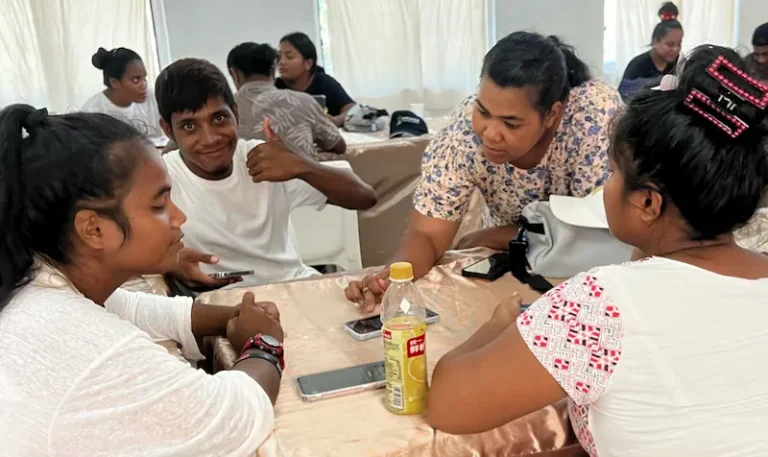
In early 2024, the Worldview International Foundation (WIF) and the South Tarawa Rotary Club launched a pilot program called the Mobile Phone Video Reporting Course. This course was designed to empower young climate activists in Kiribati. Developed by Pongtada Suriya of WIF, the program aimed to equip these young people with the skills they need to fight climate change by raising local awareness and bringing global attention to Kiribati’s environmental challenges. Ruth Cross Kwansing, the President of the South Tarawa Rotary Club, was instrumental in promoting the course on social media and organizing its rollout, which attracted 242 applicants. In the end, 12 young people were selected to participate.
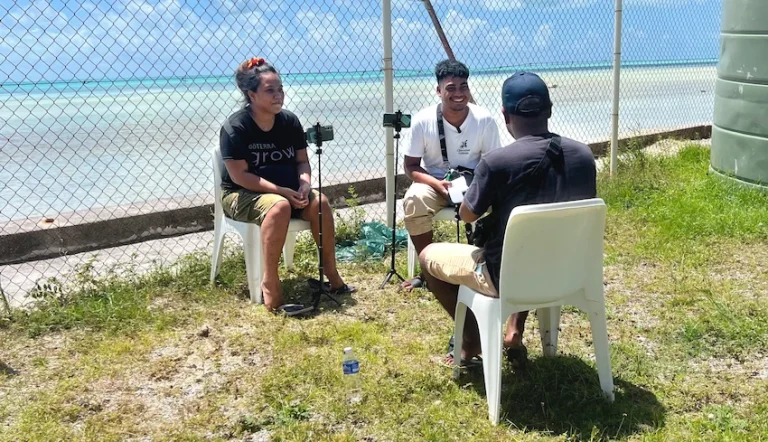
The course combined storytelling, technical skills, and education about the importance of mangrove ecosystems. Participants learned how to create compelling narratives that brought attention to urgent issues like coastal erosion and saltwater intrusion. They also received hands-on training in video production, learning how to shoot, edit, and produce content using just their mobile phones. Additionally, the course included lessons on how mangroves protect coasts and mitigate climate change, along with training on mangrove restoration.
The goal was to give these young activists the tools they needed to document the environmental threats to their communities and inspire action both locally and globally.
Youth-led mangrove restoration: surpassing expectations
After completing the course, the graduates were invited by Ruth Cross to join the Rotaract Youth Club, a junior branch of Rotary International, to continue their environmental work. Among these graduates was Miriam Moriati Koae, the leader of the club, who plans to launch social and livelihood projects with her team in Kiribati.
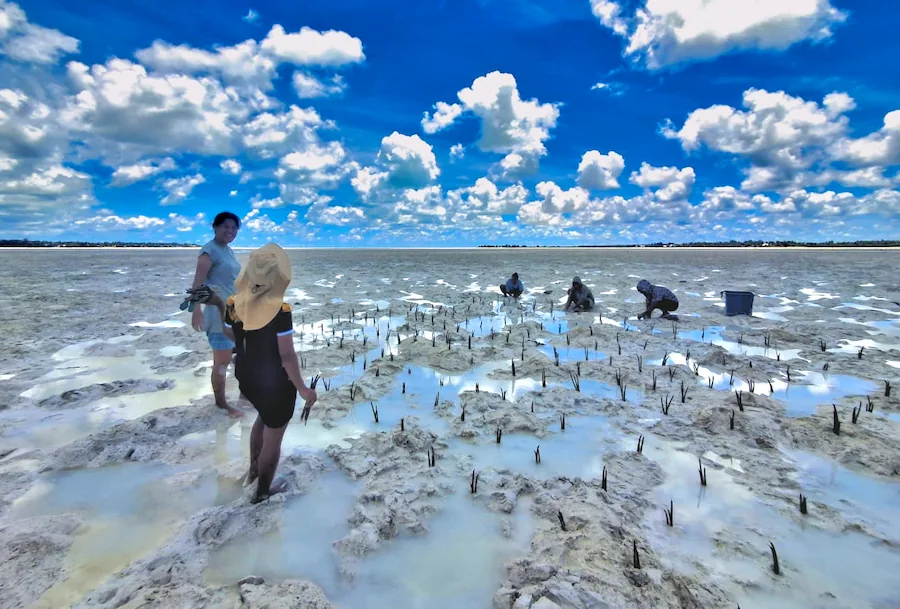
But these young people didn’t stop there. Recognizing the urgent need for action, Koae and her peers started a voluntary mangrove planting project. Koae’s leadership led her to the Environment and Conservation Division (ECD), where she secured support from four officers from the Ministry of Environment, Lands, and Agricultural Development (MELAD) to help the Rotary Youth Club with this ambitious project.
The first step in the mangrove restoration project involved collecting propagules, or mangrove seeds. The team gathered 2,495 ripe seeds from the Tanaea community area near the Coastal Fisheries Office. They experimented with different storage methods, keeping some seeds at Koae’s home and others at the MELAD Office to see how storage affected their growth. Just a week later, on August 9th, the youth team and MELAD officers planted 1,747 mangrove trees along the shoreline of Tobwaan te Tongo Park in the Bonriki Area of South Tarawa.
This initiative shows the Rotaract Youth Club’s commitment to addressing their communities’ environmental challenges. Koae’s leadership in organizing the project, securing government support, and experimenting with different methods to ensure the project’s success demonstrates maturity, responsibility, and innovation beyond expectations. Education, when paired with initiative, can empower young people to become leaders and make a real impact on their environment.
Lessons from Kiribati’s youth